
The generative AI source, notably including ChatGPT, is crucial for analyzing traffic and understanding how users interact with your content from these platforms. Precisely tracking visits from ChatGPT helps optimize engagement and marketing strategies.
Before August 5, 2026, Piano Analytics attributed a visit's source from the HTTP referrer only. Links generated by ChatGPT can use the no-referrer parameter, which prevents the browser from sending the origin of the visit. Piano Analytics then had no information to identify ChatGPT. The same happened with other AI tools that don't share the origin of the visit.
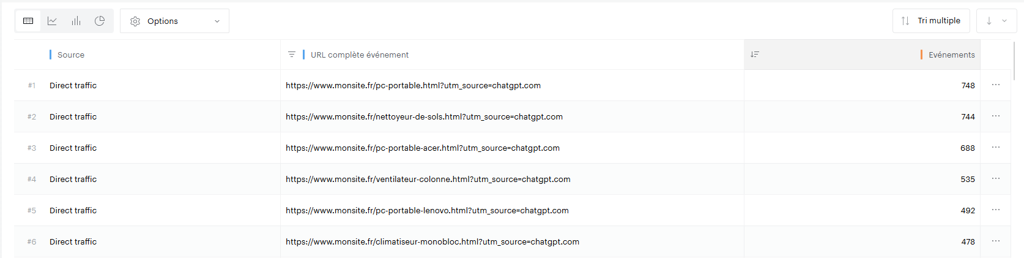
ChatGPT often adds a utm_source parameter to its links. Since August 5, 2026, Piano Analytics now matches this value against its list of values that are unique to AI apps, for example "chatgpt.com", "perplexity", "copilot.com" or "openai". The utm_source travels in the landing URL, not in the referrer header, so it identifies the visit even when the referrer is missing or stripped. The visit is classified as Generative AI, and the platform is recorded as the source detail.
Piano Analytics doesn't reclassify visits collected before August 5, 2026; you could therefore notice this behaviour in reports prior to that date.
If you need consistent historical classification before and after a platform was added:
-
Use a source group (see Source groups) that combines the "old" classification with the "new" Generative AI source.
-
Apply the source group to your reports for a unified view across the boundary.